Sunday, December 10, 2017
Klaus Liegner

"Hamiltonian Renormalisation"
We study the question whether it is possible to reformulate the Wilsonian renormalisation group non-perturbatively directly at the operator (Hamiltonian) level. Hamiltonian renormalisation would be the natural route to follow if one had easier access to an interacting Hamiltonian operator rather than to a path integral, at least in the presence of UV and/or IR cut-off, which is generically the case in complicated gauge theories such as General Relativity. Our guiding principle for the definition of the direct Hamiltonian renormalisation group is that it results in the same continuum theory as the covariant (path integral) renormalisation group. We will investigate this direct Hamiltonian Renormalisation for the case of the free massive quantum scalar field and point out its necessity in a concrete cosmological example for Quantum Gravity.
Tuesday, December 5, 2017
Visit by Andrzej Krolak
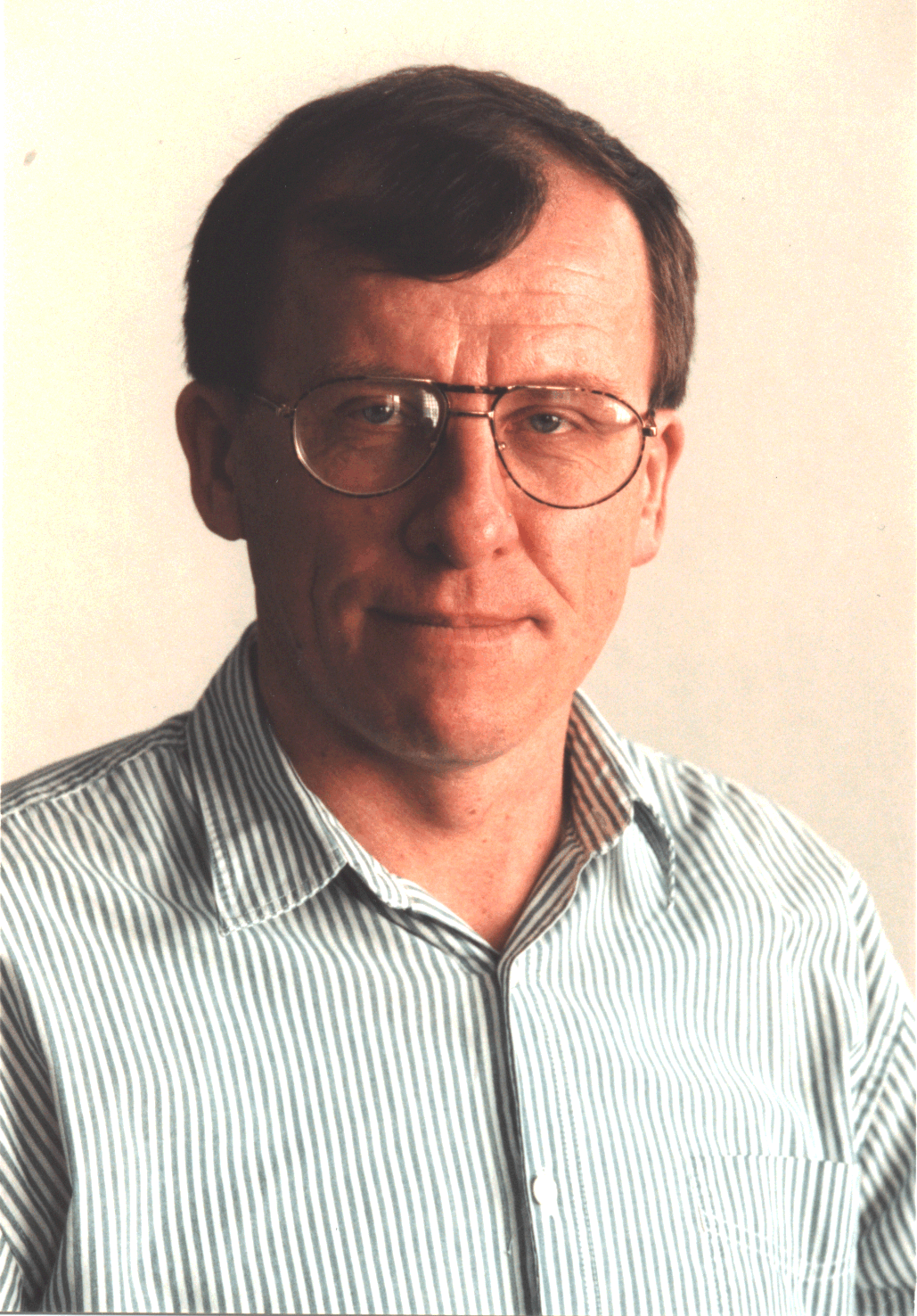
Prof. Krolak from Institute of Mathematics, Polish Academy of Sciences at Warsaw is visiting us from Nov 27-Dec 6, 2017. Prof. Krolak has made very seminal contributions to our understanding of strength of singularities, and various aspects of theoretical gravity and gravitational waves. He is the head of the Polish gravitatioanal wave community involved with Virgo gravitational wave detector.
You are welcome to discuss with Andrzej in room 255.
Friday, November 10, 2017
Talk by Andrea Dapor

Place: 241 Nicholson
Date: Tuesday November 14th
Time: 9am
Title: Coherent States in LQG: Cosmology, Black Holes and Effective Dynamics
Monday, August 28, 2017
Seminar by Prof. Christian Fleischhack
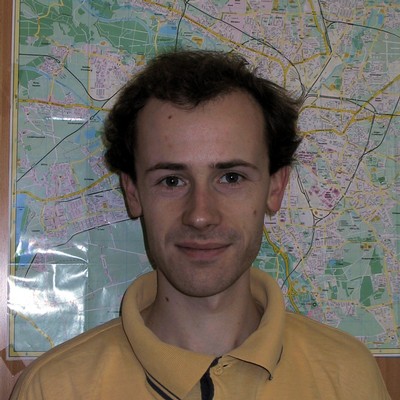
Seminar by
Prof. Christian Fleischhack
Symmetries in loop quantum gravity
Date: Aug 30, 2017
Time: 11:30 AM
Gravity Suite
Friday, May 12, 2017
Talk by Raul Carballo-Rubio
Seminar by Raul Carballo-Rubio

Talk time and date:
May 17th at 11:00 AM in Nicholson 241
Title: Exponential decay of black holes into white holes
Abstract: In recent years, it has been proposed by different authors that non-perturbative quantum gravity effects may turn black holes into white holes. To evaluate the characteristic time scale of this transition, a theory of quantum gravity that assigns probabilities to geometric interpolations between black hole and white hole geometries is needed. In this talk, I will explain the results that are obtained in a truncation of the problem that assigns probabilities à la Euclidean quantum gravity to a reduced set of interpolating geometries. I will show how an exact exponential decay law is found, extract the characteristic time scale that follows from it, and discuss the astrophysical relevance of this calculation.
Wednesday, March 22, 2017
Seminar by Andrzej Krolak
 Seminar by Andrzej Krolak

Strong curvature singularities
- past and future
Time: 12:30 PM
Date: March 23, 2017
Gravity Suite
Monday, March 20, 2017
Seminar by Lucas Fabian
Seminar by Lucas Fabian
 Talk time and date:
March 21th at 11:00 AM in Nicholson 241
Title: Review / progress report on entanglement of squeezed vacua
Abstract: There is a lot of ongoing work using complex structures to study power spectrum and entanglement entropy of scalar perturbations in cosmology. I will review our general methods and explain the machinery connecting entanglement entropy, correlation function and complex structure for Gaussian states. There are some subtleties when going from finitely many degrees of freedom to infinitely many, due to unitarily inequivalent representations. A recent progress provided an elegant method of finding adiabatic vacua using an ε expansion of the complex structure, rather than going through the standard WKB approximation. This aspect is still incomplete, but I will explain the general approach.
Seminar by Lucas Fabian
Seminar by Lucas Fabian
Talk time and date:
March 20th at 1:30 AM in Nicholson 241
Title: Entanglement production at parametric resonance
Abstract: The most prominent example in cosmology is the reheating phase where one couples a test scalar matter field to the inflaton field treated as a classical source. Our result is a generic theorem stating that the entanglement entropy associated to a detector grows linearly in time with a slope given by the Floquet exponents associated to resonant modes.
Monday, January 9, 2017
Seminar by Alec Yonika

Talk time and date:
Jan 11th at 11:30 AM in Nicholson 241
Title: Numerical Analysis of the Schwarzschild Interior
Abstract: Loop quantum cosmology (LQC) is a theory attempting to unite the fields of quantum theory and general relativity. In these unification attempts, LQC takes the continuous spacetime of general relativity and makes it discrete. This discretization yields some interesting results; namely, the emergence of finite-difference (FD)
equations where partial difference equations usually present. FD
equations present some opportunities for analysis that are not normally present. This opportunity is that of numerical analysis. Largely, numerical analysis of LQC schemes has been ignored. To rectify this, we present a method of analyzing LQC schemes. We take the example of the scheme presented in Corichi and Singh [1]. However, the methods presented herein may be used in the general case.
Subscribe to:
Posts (Atom)